
Devon Andre -Dec 9,2024
Dec 9,2024

Advertisement
Advertisement

Age-related macular degeneration (AMD), a leading cause of vision loss among the elderly, is also linked to Alzheimer’s disease. A study has revealed that the proteins associated with Alzheimer’s disease can accumulate in the retina and damage it. The researchers are hopeful their findings can work to improve treatment methods. Study lead Dr. Arjuna Ratnayaka ...click here to read more

Mild cognitive impairment (MCI) is the intermediate stage between cognitive impairment associated with normal aging and dementia or Alzheimer’s disease. Problems with memory, thinking, language, and judgment that occur in MCI are greater than those experienced in normal aging. In MCI, family and friends may notice cognitive changes and you, as well, may recognize that ...click here to read more

Dropping those few extra pounds that have miraculously found their way to you may be a real challenge. Sure, as we age, we become less active and maybe our diet isn’t the healthiest out there, but even if you do watch what you eat and exercise regularly, you may still be struggling with weight loss. ...click here to read more
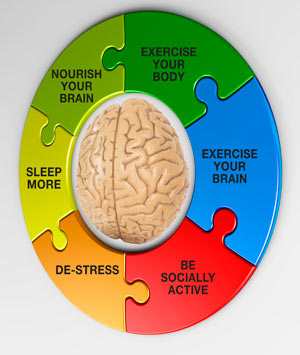
Alzheimer’s disease is reaching almost epic proportions in North America. In fact, if it was infectious, it would be classified as an epidemic. ABC News recently reported an estimated 10 million baby boomers will develop Alzheimer’s disease. That’s one in every eight persons over the age of 65. The increase in prevalence rates, and the ...click here to read more

Stress is one thing most of us face in our hectic lives. But post-traumatic stress disorder (PSTD) is a disease of intense mental anguish from the kind of life or death trauma faced by soldiers in combat, a car crash, serious injury, sudden death of a loved one, or sexual violence. Trauma to this degree ...click here to read more
Advertisement

Lewy body dementia (LBD) may often be misdiagnosed as Alzheimer’s disease, according to research findings. Howard I. Hurtig, chair at the department of neurology, Pennsylvania Hospital warned, “While the symptoms of LBD may be similar to Alzheimer’s and Parkinson’s disease, the treatment strategy is more challenging because fewer medications can be used safely. I cannot ...click here to read more

Some dementia patients may start exhibiting aggressive behavior as the disease progresses. There are different causes for behavioral changes in dementia which don’t necessarily revolve around the disease itself. For example, behavioral changes may be associated with some sort of difficulty brought on by dementia, side effects of medications, changes in environment, social interactions, habits, ...click here to read more

Sleep disorders are a common problem in Alzheimer’s disease. Because sleep is such an important aspect of overall good health, it’s important to find ways of improving sleep in Alzheimer’s patients in order to reduce the risk of other health complications. You may be wondering, why Alzheimer’s disease and sleep disorders coexist. It mainly has ...click here to read more

Lew body dementia (LBD) is an umbrella term referring to both Parkinson’s disease dementia and dementia with Lewy bodies. In dementia with Lewy bodies, cognitive symptoms interfering with daily living present themselves before or within one year of Parkinson’s-like movement problems. In Parkinson’s disease dementia, cognitive symptoms usually don’t appear until after a year of ...click here to read more

In dementia patients, depressive symptoms may be reduced with high-intensity exercise and group activities. Author of the dissertation Gustaf Boström explained, “Unfortunately, depression is common among older people, especially in people with dementia. Treatment with antidepressant drugs is often ineffective in older people and people with dementia. In addition, the risk of drug-related side effects ...click here to read more

Delirium after cardiac surgery is linked to prolonged loss of cognitive function. The findings of the study suggest that interventions to prevent delirium in advance of surgery could help cardiac patients avoid long-term cognitive consequences. Co-lead author Jane Saczynski explained, “Our findings now suggest that postoperative delirium, once thought of as an acute, transient cognitive ...click here to read more

Agitation and anxiety in Alzheimer’s disease are just some of the possible behavioral symptoms a patient may experience. These symptoms often develop in the later stages of Alzheimer’s disease. Agitation can present itself as verbal or physical outburst, general emotional distress, restlessness, pacing, or even shredding paper. Understanding the root cause of behavioral symptoms in ...click here to read more

High blood pressure may raise the risk of developing vascular dementia. The analysis of medical records from over four million people helped researchers identify high blood pressure as a risk factor for vascular dementia. Vascular dementia develops when part of the brain isn’t getting enough blood carrying the oxygen and nutrients it requires. Some people ...click here to read more

Mild cognitive impairment in older adults may improve with computer-based brain training before dementia diagnosis. The researchers reviewed over 20 years of research and found that brain training could improve cognitive function, memory, learning, and attention, along with psychosocial functioning (mood and self-perceived quality of life). On the other hand, when data from 12 brain ...click here to read more
Five-Star Guarantee of Satisfaction