Devon Andre -Dec 9,2024
Dec 9,2024

Advertisement
Advertisement

A study published in the Canadian Medical Association Journal (CMAJ) found a link between sleep apnea and pneumonia. It discussed that those who suffer from sleep apnea are at a higher risk of pneumonia. Sleep apnea is a chronic sleep disorder that affects approximately 18 million Americans, so you’re not alone. With sleep apnea, your ...click here to read more

Bipolar disorder and poor sleep quality trigger negative moods in women. Bipolar disorder is a mental illness characterized by mania highs and extreme lows in mood. These changes in mood are not instant and in fact manic episodes can last for days along with depression. Bipolar disorder can wreak havoc on a person’s sleep in ...click here to read more

Adults who eat fermented foods have a decrease in social anxiety. The study came out of the University of Maryland School of Social Work, where researchers investigated a possible association between social anxiety and fermented foods, which are known to contain probiotics. They found that young adults who consume more fermented foods have fewer social ...click here to read more
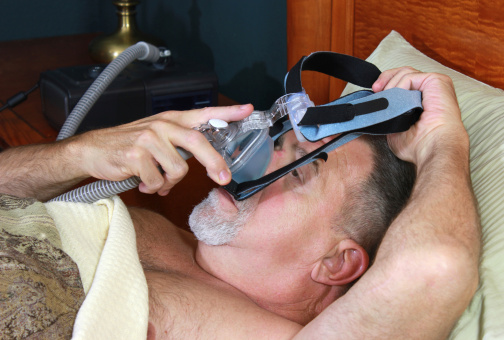
CPAP (continuous positive airway pressure) use in obstructive sleep apnea reduces atrial fibrillation recurrence. It has been observed that in patients with heart failure, high blood pressure and stroke, there is a high prevalence of sleep apnea – a sleep disorder where a person stops breathing for brief moments throughout the night. Although an evident ...click here to read more

Fibromyalgia is associated with a higher risk of stress, anxiety and depression. Aside from being a physical disease – patients with fibromyalgia live with chronic pain – fibromyalgia is also very much a psychological disease and is closely associated with stress and depression. Although much research has revealed the association between the conditions, the exact ...click here to read more
Advertisement

Prostate cancer among elderly men can lead to anxiety and depression. Prostate cancer is the most common form of cancer in elderly men, and even though medical advancements are allowing more men to live with a diagnosis of prostate cancer, depression and anxiety can still linger and affect treatment and recovery. Both depression and anxiety ...click here to read more

Alzheimer’s disease risk in elderly due to mild cognitive impairment can increase with stress. Mild cognitive impairment (MCI) is part of the stages leading up to Alzheimer’s disease. In this stage symptoms of memory loss are noticeable but do not interfere with the person’s everyday life. Mild cognitive impairment is when memory and cognitive abilities ...click here to read more

Frontotemporal dementia (FTD) is a group of disorders categorized by the progressive loss of nerve cells within the brain’s frontal lobes (found directly behind the forehead) or temporal lobes (Areas behind the ears). When nerve cells are lost in these areas of the brain behavior and personality can begin to deteriorate along with changes to ...click here to read more

Post-traumatic stress disorder, or PTSD, an anxiety disorder, is often associated with those who have gone to war. PTSD happens after people have experienced traumatic events and continue to recall stressors. Symptoms of PTSD can come in the form of nightmares, flashbacks, difficulty sleeping, and feelings of detachment. Since PTSD is most commonly associated with ...click here to read more
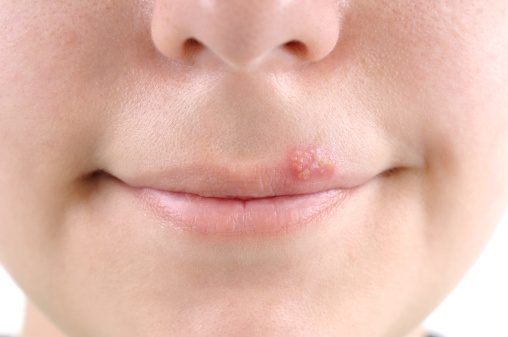
Cold sores (herpes simplex virus) can raise the risk of memory loss and Alzheimer’s disease. Cold sores are not only unsightly to look at and uncomfortable, but they can be a sign of serious health problems as well. Previous research on cold sores has found that they can be tied to memory loss, but more ...click here to read more
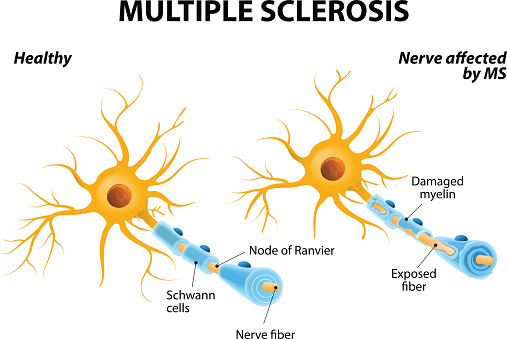
Multiple sclerosis paroxysmal symptoms can be confused with seizures due to its sudden onset. Paroxysmal symptoms are unique to multiple sclerosis (MS) and involve unusual sensations or muscular contractions. The main differences between multiple sclerosis paroxysmal symptoms and epileptic seizures are that paroxysmal symptoms do not cause short-circuiting of brain waves and do not have ...click here to read more

Estrogen hormone fluctuation during menopause increases sensitivity to stress and depression. Estrogen is typically a female hormone – it is also found in small amounts in males – that is produced by the ovaries, the adrenal cortex and the fetoplacental unit. Estrogen’s main roles are development and growth in female secondary sexual characteristics, such as ...click here to read more

Ataxia is a neurological movement disorder that affects muscle coordination, disrupts balance and impairs walking. The effects of ataxia are due to damage caused to the cerebellum – a part of the brain that controls muscle coordination. There are many different types of ataxia; over 40 types are inherited. Some types of ataxia include cerebellar ...click here to read more

When cholesterol is discussed we often think about the heart, heart disease and even stroke, but memory and cognitive function don’t generally cross our minds, although they should. New research from Heidelberg University in Germany found that having high cholesterol can negatively affect memory and cognitive decline in aging. Cholesterol is naturally produced by the ...click here to read more
Five-Star Guarantee of Satisfaction