
Author Archives : Emily Lunardo

Emily Lunardo studied medical sociology at York University with a strong focus on the social determinants of health and mental illness. She is a registered Zumba instructor, as well as a Canfit Pro trainer, who teaches fitness classes on a weekly basis. Emily practices healthy habits in her own life as well as helps others with their own personal health goals. Emily joined Bel Marra Health as a health writer in 2013.

Advertisement

Myasthenia gravis, a neuromuscular disease, causes voluntary muscle weakness and fatigue

Myasthenia gravis, a neuromuscular disease, causes voluntary muscle weakness and fatigue. Myasthenia gravis is the weakness and rapid fatigue of voluntary muscles caused by the breakdown of the communication between nerves and muscles. Myasthenia gravis commonly affects women under the age of 40 and men over the age of 60. There is no cure for ...click here to read more

Best exercise for type 2 diabetics are short burst, high-intensity workouts

When it comes to the best form of exercise for type 2 diabetics, short burst, high-intensity workouts trump the rest. The new research suggests that short burst, high-intensity workouts improve cholesterol, blood sugar and weight more than 30 minutes of sustained, low-intensity exercise. The findings were presented at the American Heart Association’s Scientific Sessions 2015. ...click here to read more

Behavioral changes can improve health

Behavioral changes are a successful way to improve health, according to recent findings. Behavioral health interventions have been found to help people make appropriate lifestyle changes in order to improve their heart health. Additionally, the way health interventions are evaluated by researchers also requires a change, according to co-author of the study Veronica Irvin, Ph.D. ...click here to read more

Advertisement

Does alcohol play a role in Parkinson’s disease?

For years researchers have aimed to uncover a link between lifestyle choices like alcohol consumption and Parkinson’s disease. Now researchers have found conflicting evidence surrounding the connection. In a review of literature from 2000 to 2014, researchers found little evidence to support or negate an association between alcohol consumption and Parkinson’s disease (PD). In studies ...click here to read more

Scleroderma, a GERD risk due to excess collagen in esophagus

Scleroderma is a gastroesophageal reflux disease (GERD) risk due to excess collagen in the esophagus. Scleroderma (systemic sclerosis) is a condition involving a group of diseases that result in the hardening of the skin and connective tissues. Typically scleroderma affects just the skin, but in some individuals it can also affect structures of the body ...click here to read more

Leading cause of blindness (AMD) could be delayed or prevented: Study

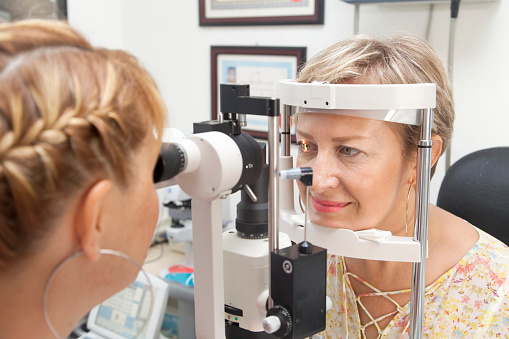
Researchers have found that a drug commonly used to treat Parkinson’s disease may be able to delay or even prevent the leading cause of blindness – macular degeneration. The findings are ground-breaking and the first of their kind to combat age-related macular degeneration (AMD). AMD affects roughly 11 million Americans and impairs central vision. Although ...click here to read more

Seasonal affective disorder (winter depression), adult mood disorders linked to birth seasons

Seasonal affective disorder (SAD) is a type of depression that commonly affects people during the winter months. As the daylight decreases over the winter, people will feel a depression that goes away during the spring and summer. Women are more likely to experience seasonal affective disorder, along with individuals who live furthest from the equator ...click here to read more

Advertisement